
I really don’t know how to unleash my feelings but I am going to share whatever my procrastinated hands would scribble.
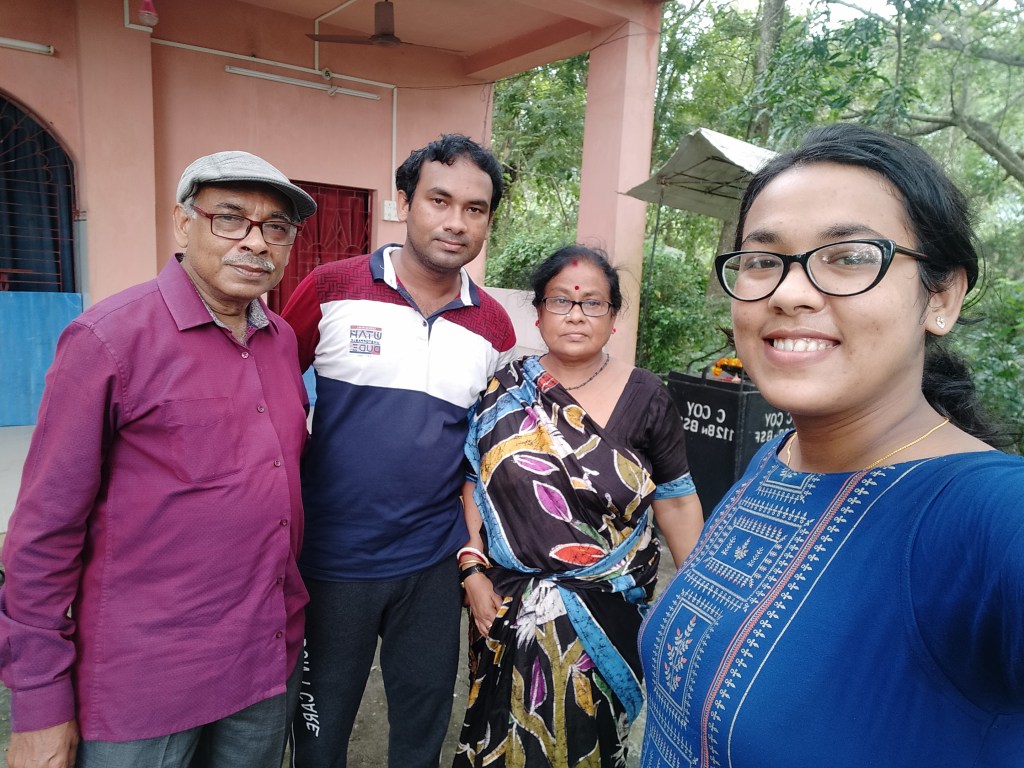
As my father had never gone to mohanpur campus where my elder brother is pursuing his PhD programme, my parents planned to visit his place- IISER KOLKATA, Mohanpur to spend some time there. However, as soon as I came to know about their plan I being very excited joined them.
Dada (my elder brother) booked a car for us which took almost 2 hours to reach there from our village- Andul. It was a fair morning of the month of October (3rd October, 2021) which was beckoning us to confront the tenderness of reverence and peace. Contrastingly, the festive nature adorned with catkins(in bengali- কাশফুল) drew humble white beauty against the cozy green and the horizon met the limitless sky in an unprecedented manner. The places near Kalyani are not cluttered. They are soothing to eyes and touching for heart; I remember the name of a place called Kampa from where the campus is just 20 minutes. After leaving kampa finally we reached there through the main gate(gate no. 4) where Dada had been waiting for us.
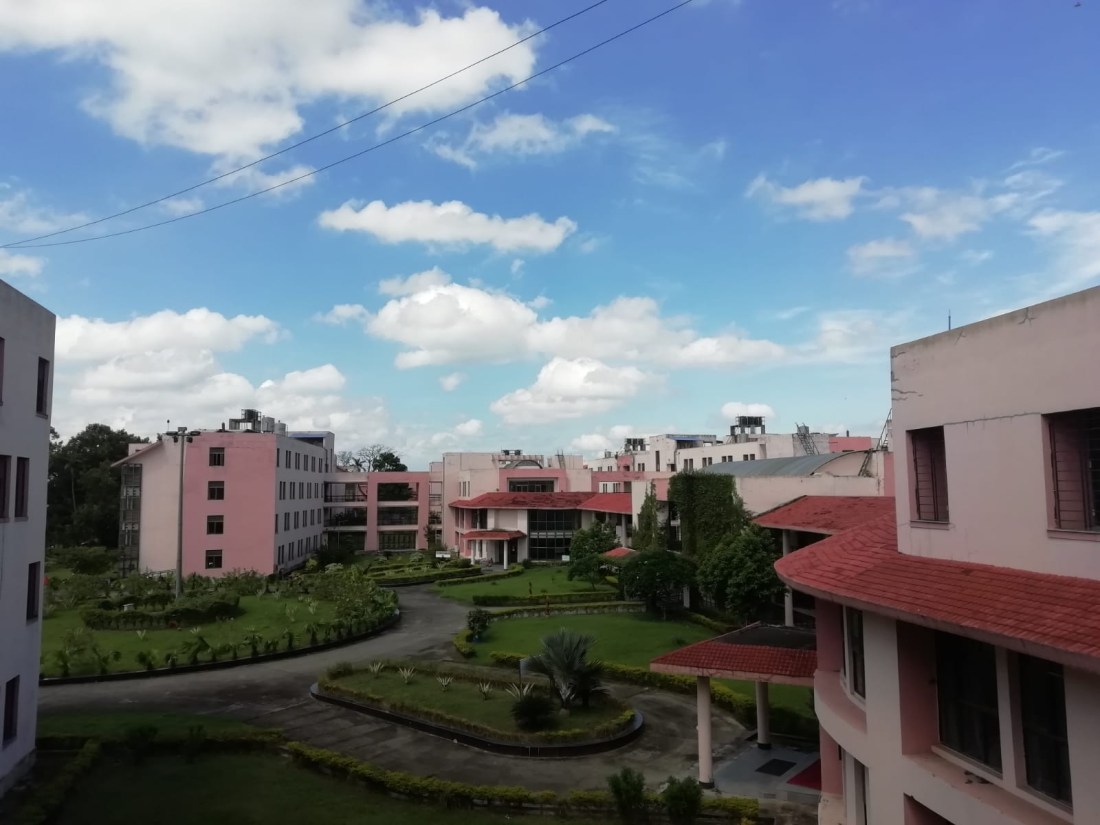
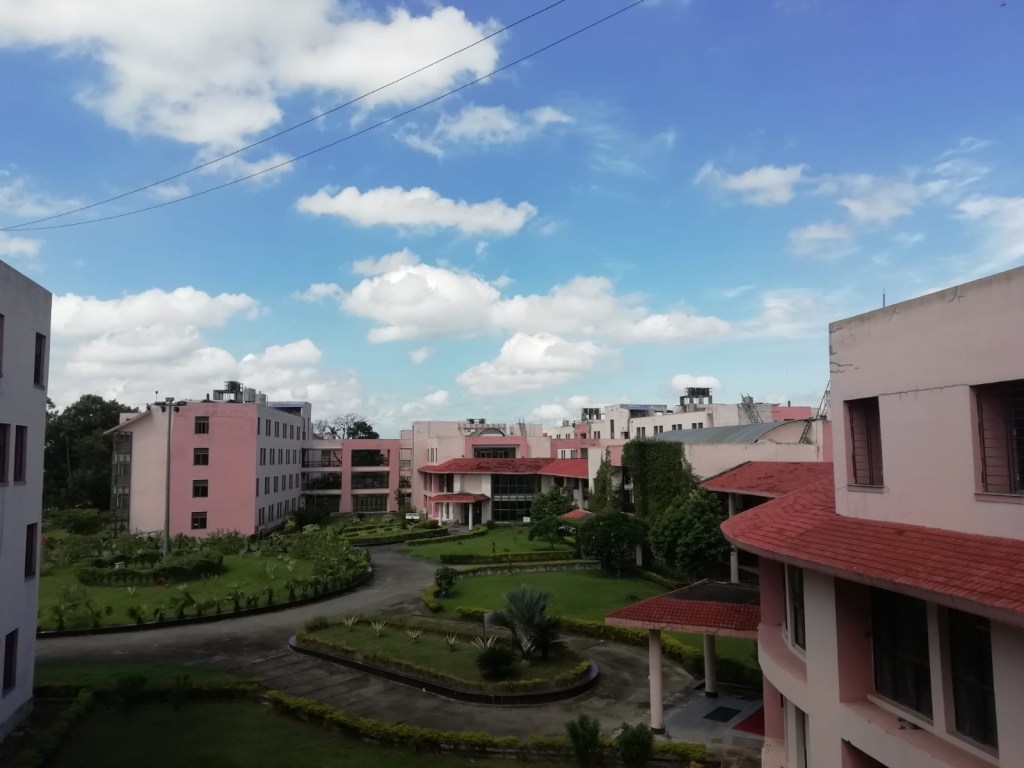
It was my father’s first time visit to my Dada’s research institute and I could feel the joy in his eyes for his son when the car just crossed the well maintained, neat and clean entrance. The overwhelming and mild elated eyes of my father expressed the faith of a father cherishing his child’s success. However, the huge campus seemed to me like the mixed wrapper of silent bliss and spry talents. My mother became harmonious with the flow of the environment and nostalgia brewed in her daydreaming.
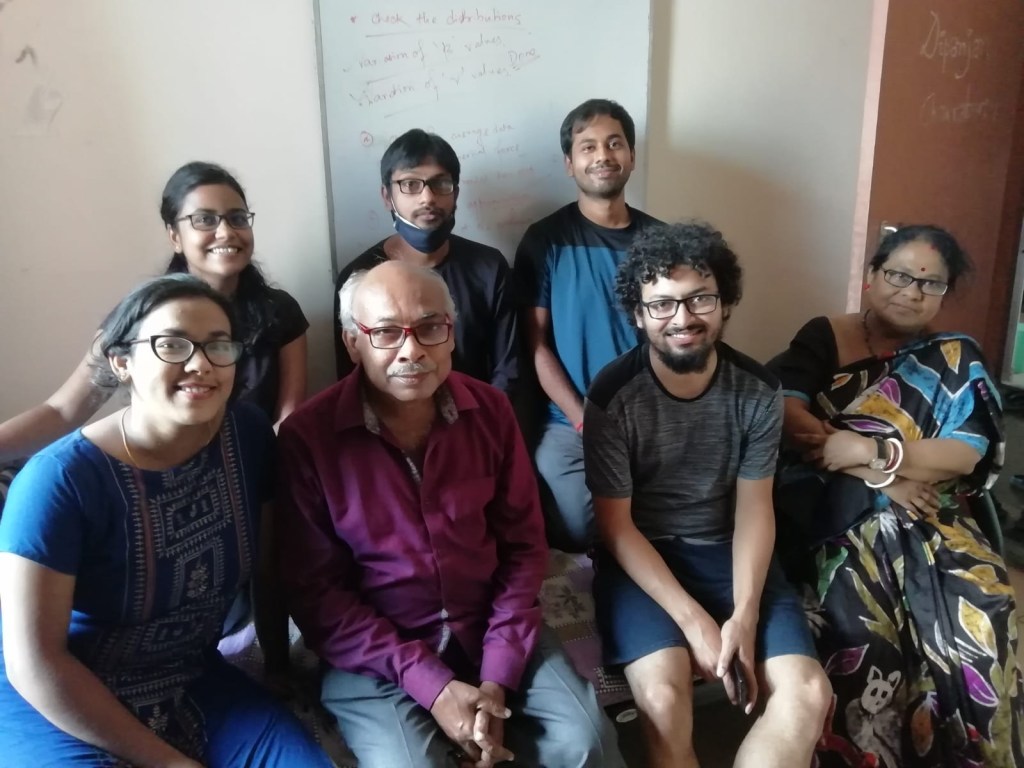
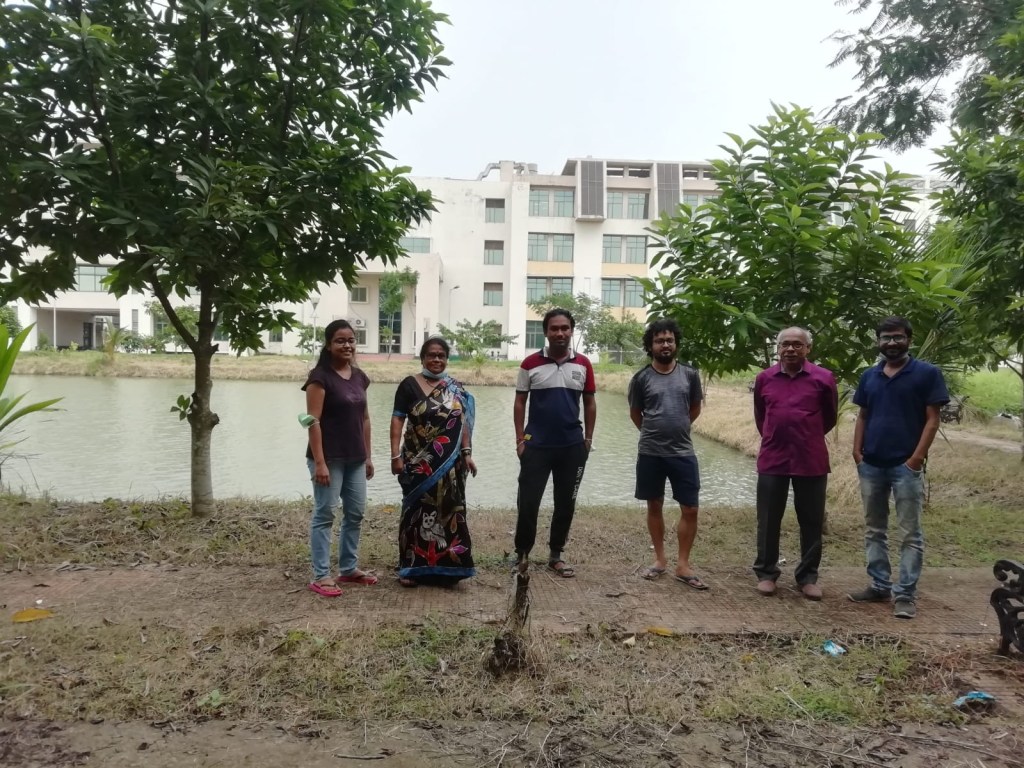
Then, we entered the hostel, went upstairs and got into room no.322. The door of room no. 322 unveiled sweet mischief of my brother; he wrote his name on the door as if to live there for lifetime! To break our hunger we had canteen-made “suji”,collected by my sweet brother. After that every friend of Dada (Sayani di, Abhijit da, Subhadeep da, Bishnupada da, Tapas da, Diganta da, Suchetana di) came to meet us and they literally mixed up with us within such a short period of time. The frank and glib approach of them created amiable moments of spontaneous reactions where differentiations stood like the power of dignity and the aura of natural fun. Perhaps their simplicity connected the gap of being unknown. As we are sweet-loving persons, we took some sweets for them which they lovingly ate and those who did not like also embraced it. Apart from them another ‘person’ broke into our privacy whose name was momo, the doggy which was loitering in front of the door.Then it was the lunch time when we had delicious meals of the canteen. This canteen is huge and looked silvery clean. Students can also cherish their little pastime watching TV in that big hall of the canteen. I do not know whether it would sound foolish or not but I remember when we were eating lunch the famous film -Bahubali was going on in the TV. After finishing lunch we had another round of gossip; here no one can defeat my father and his favourite topic is perhaps wedding and the custom of finding brides for boys and groom for girls. So, when that cheesy and annoying gossip came to an end we went down to roam about the whole campus.
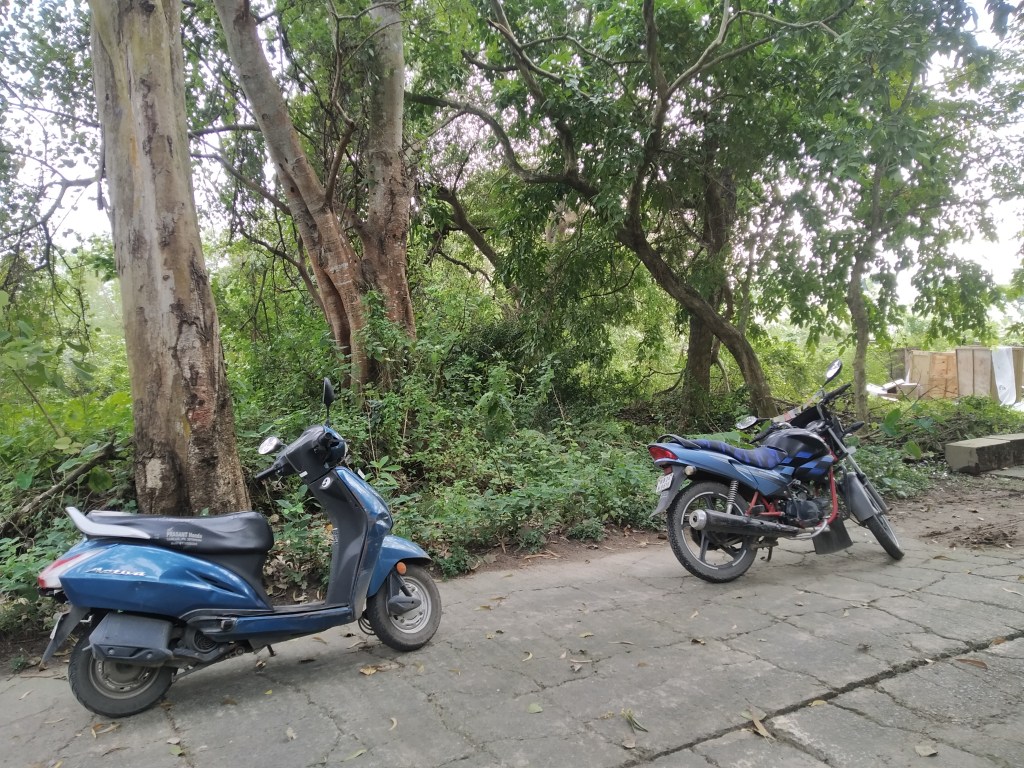
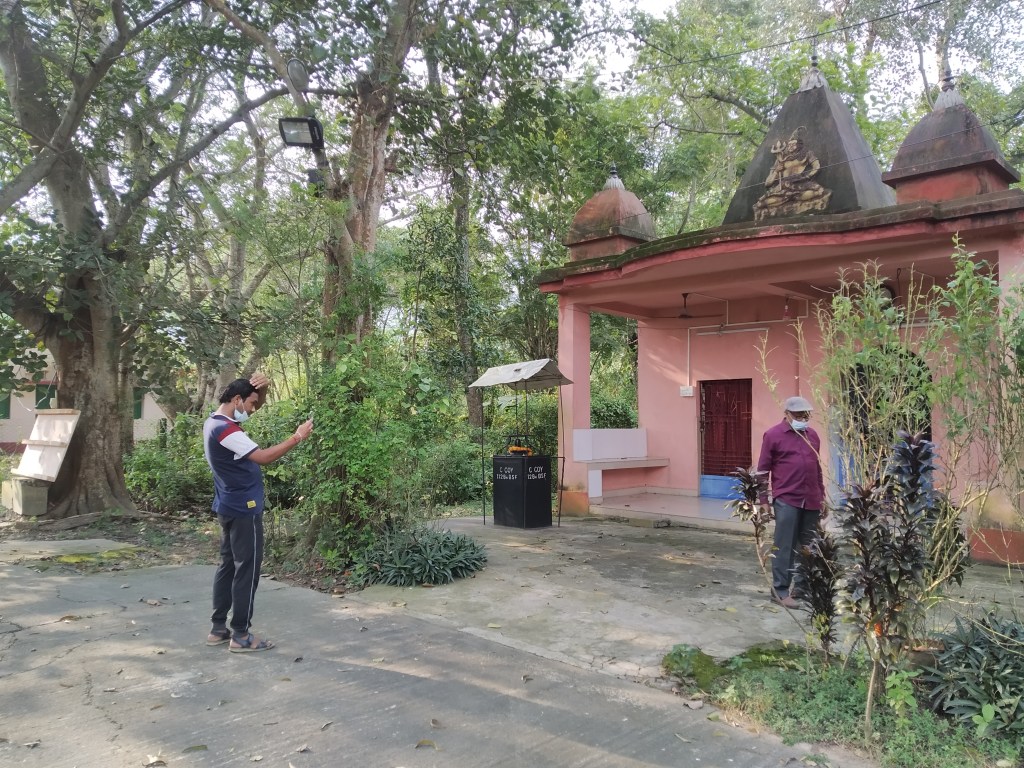
Dada took a bike and I took Diganta da’s scooty. Without having any other option my father believed in me for the first time to carry him. However, I loved the ride and a funny incident took place; the cap of my father was blown out by the stormy wind then. I was wondering to see the vast greenery of the place. There was a strange essence in the temple side where the trees webbed an unknown adventure. Dada showed us Bimal da’s tea stall also.
After that we visited the lab where Dada spends most of his time working. All I could realize there is that research is all about reverence, patience and peace. There was no eloquence to justify anyone’s capabilities; instead there was taciturn conversations. Really I never felt like this before. It is somehow a unique experience that is added in my bag of memory with lots of respect and love.
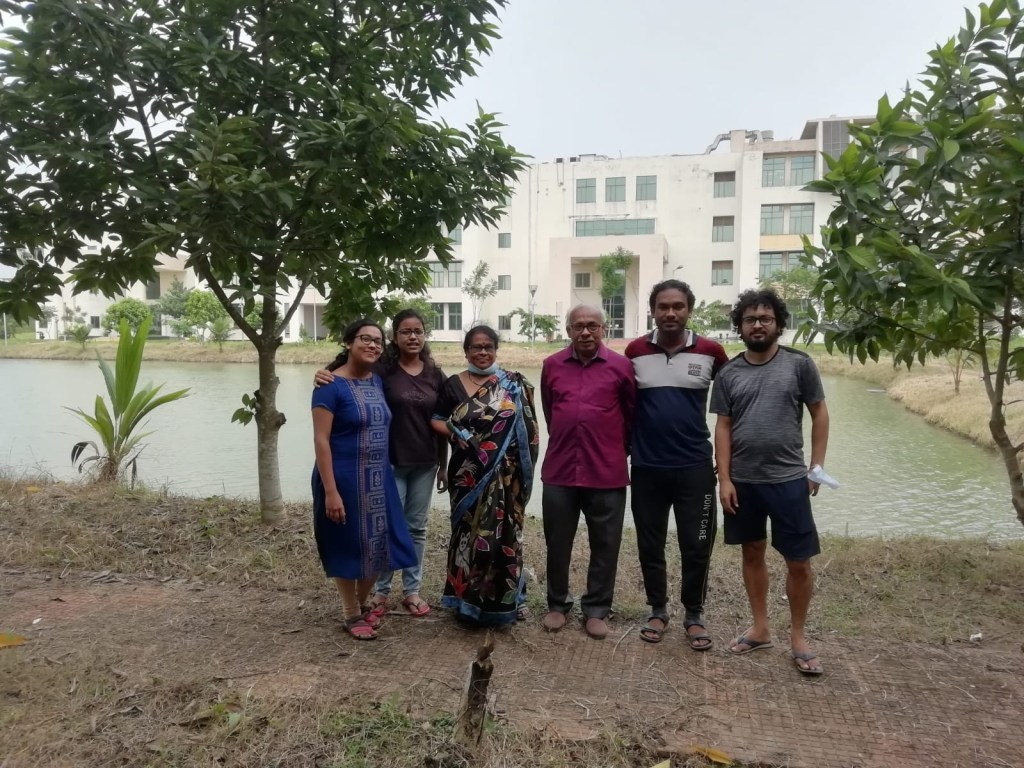
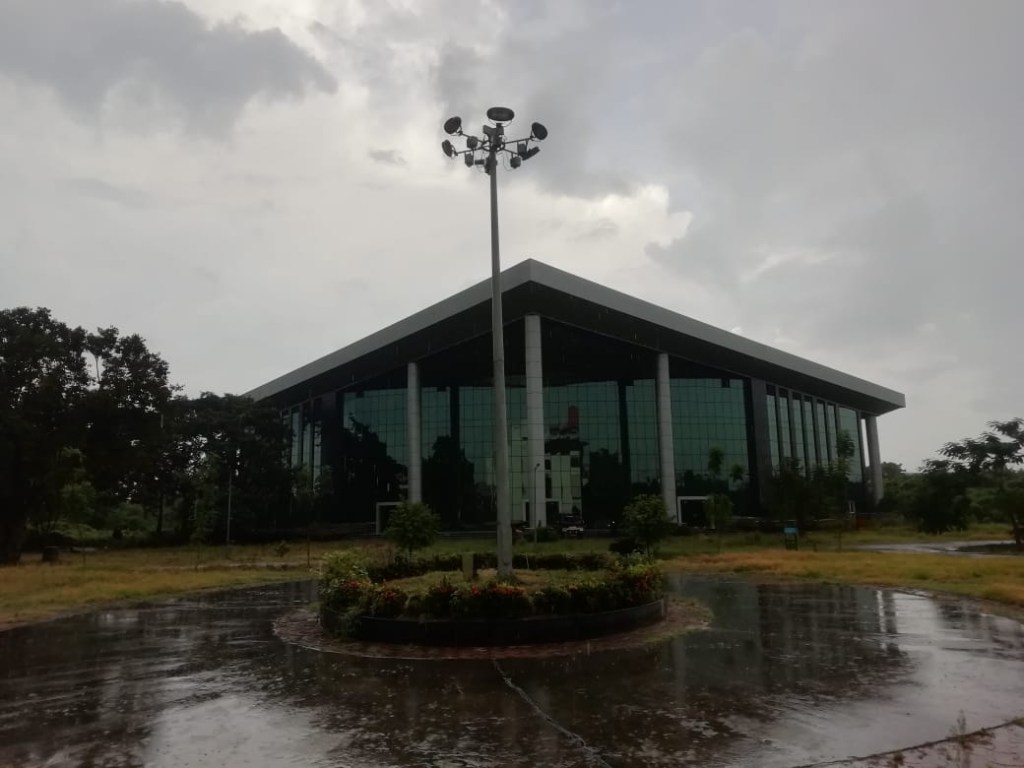
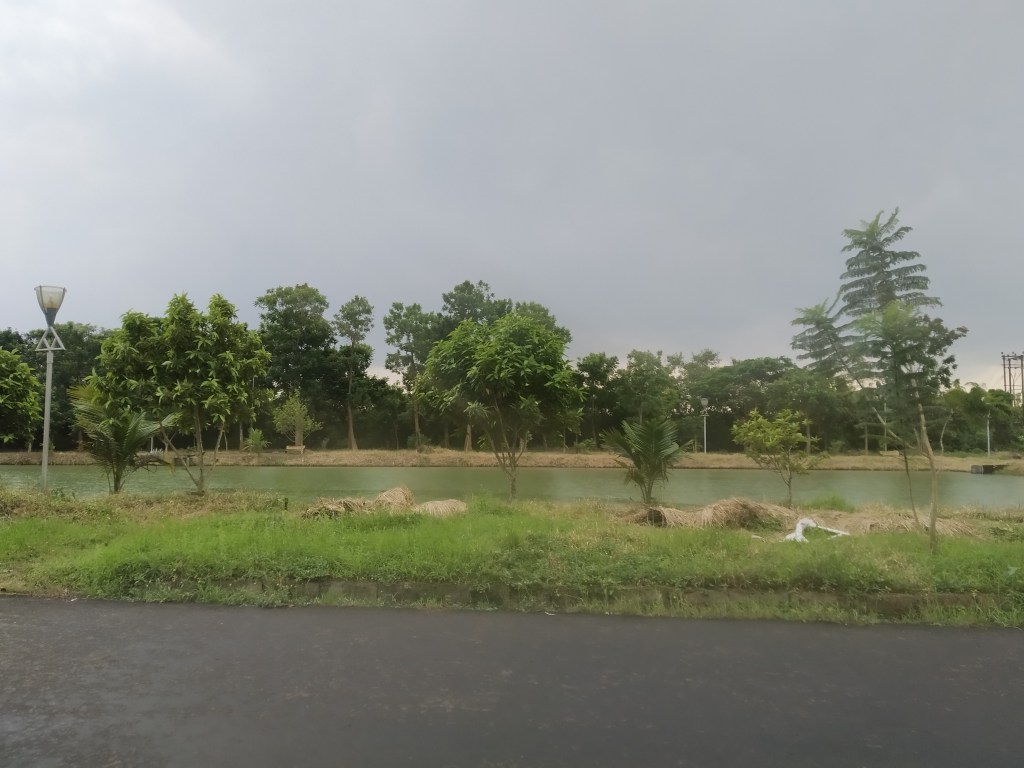
Suddenly it started raining and the place in front of the lab seemed to be happening more and more. It is a place where I can sit for hours and just observe, observe and only observe.
Then at 5.30pm we left the place after having tea and biscuits.
 Prevailing folds to unfold.........