
Until your late twenties you are supposed to do your studies very well but after that it becomes less significant in a middle class family. The result of the outcome of education remains stagnant in many ways. I hope some changes will bring light to it.
Author: Ranita Chakraborty
Life and Happenings
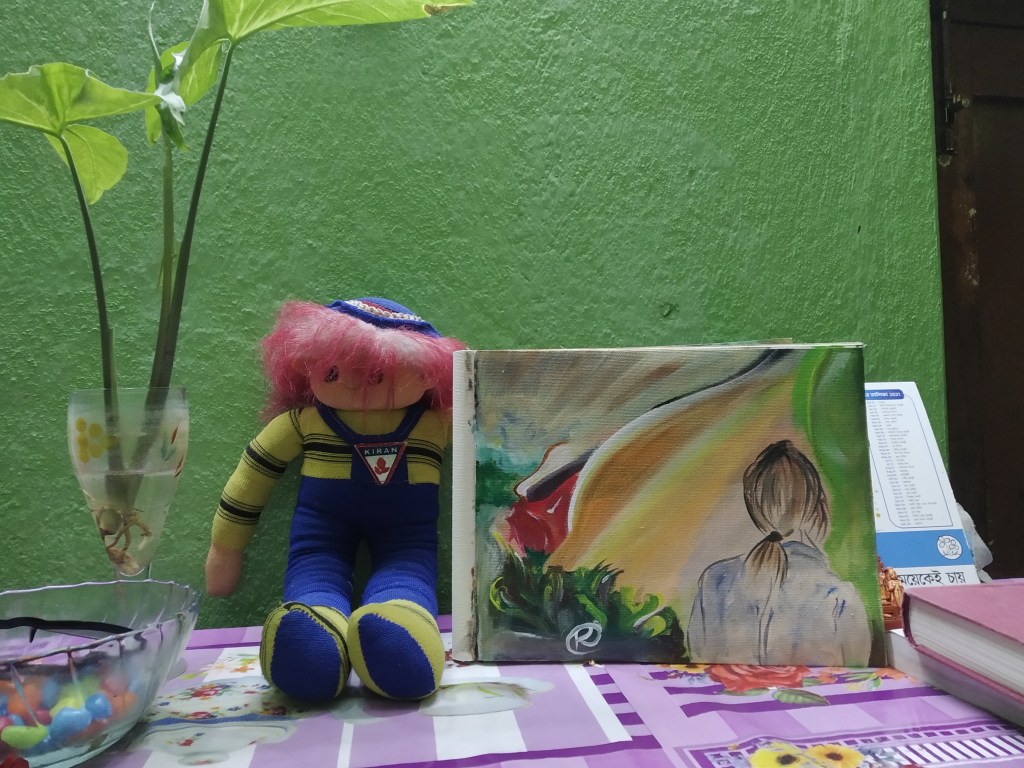
Where Observation Matters
If we draw a fine line between our thoughts and appearance then every mote will be exclamation but no one has taught us how to draw it. I think we are too busy in the ‘rat race’ of success and failure. We forget there are way-better virtues to rely on. I want to share my own experience that had helped me a lot.
When I indulged myself in birding during my college days I could not realize how observation benefited me to look things differently and wisely. To observe without any judgement and any conclusion is the most precious thing to happen. If you truly practice only observing then it would definitely make you better.
Guide to Think
If we are thinking that thinking is not good for our health then it’s a myth because thinking is also important to take any step; but we should be aware that it is not over. When overthinking happens we tend to imagine things which are not actually present at that moment. Then what can be the solution? So our goal is to put a stop to our imagination. Immediately we should try to pause our inner voice and any other’s and for that we must depend on other things which does not talk or have words because then words are consciously or unconsciously mistaken by us. Either we can convert that energy to any physical work or we can listen to instruments or we can write up the things completely complementing our inner voice.
Quote
Eventually we forget the difference between ‘compare to’ and ‘compare with’.
A Tiny Trip to ‘Mukutmanipur’
In this Corona-era life has taught us a lot but the monotonous being has snatched all our trivial happiness. A few times earlier, the wishes were wingless and meek but they now defy to prepare their wings for a little fly.
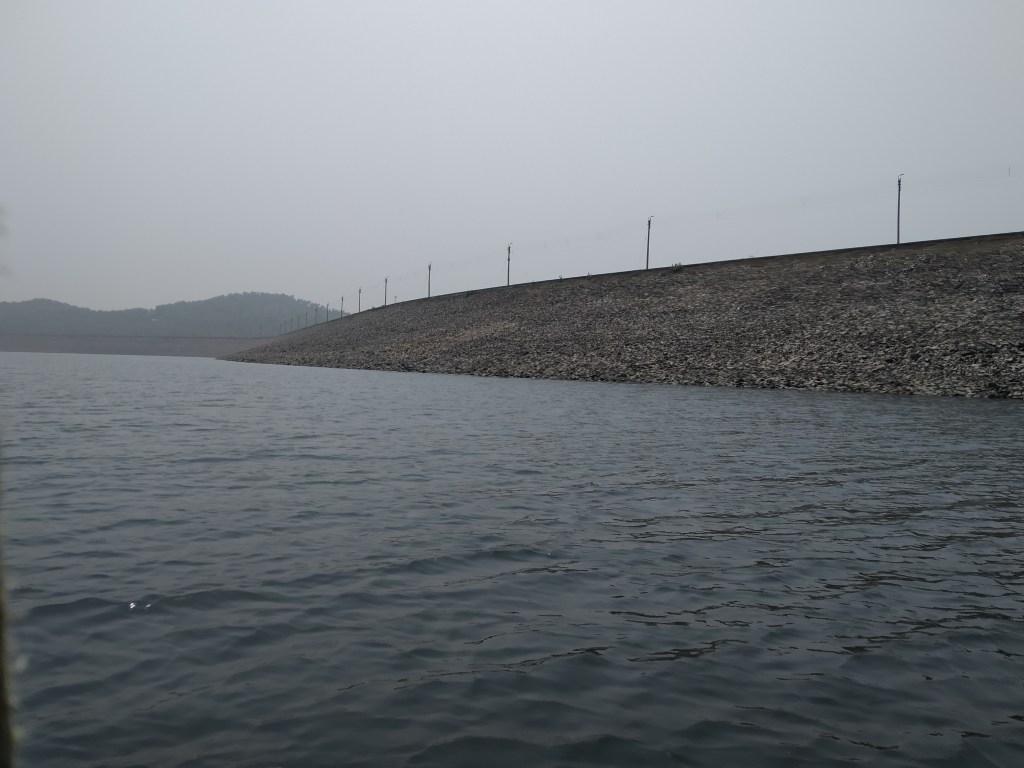
When the heavy breathings of so much uncertainties and negligence overwhelmed, I tried to part with them and indulged myself in finding the way of having a free-freedom. As we know beauty is always in our eyes, so I decided to go to ‘Mukutmanipur’ which is just 180 Km away from Howrah and located in the district of Bankura. I think this pocket-friendly trip can give amiable moments to rejuvenate a craving soul who wants to explore. However, it would be better if I can depict the whole journey and offer you to visualize those tiny happy moments.
There are different routes to reach this village.
- From Kolkata many private buses are available which would take almost 6 hours.
2. By train, reach Bankura Station and then go to Bankura bus stop to avail Buses heading towards Khatra. From Khatra Mukutmanipur is only 11 km. One may book a car from Bankura station to reach Mukutmanipur directly.
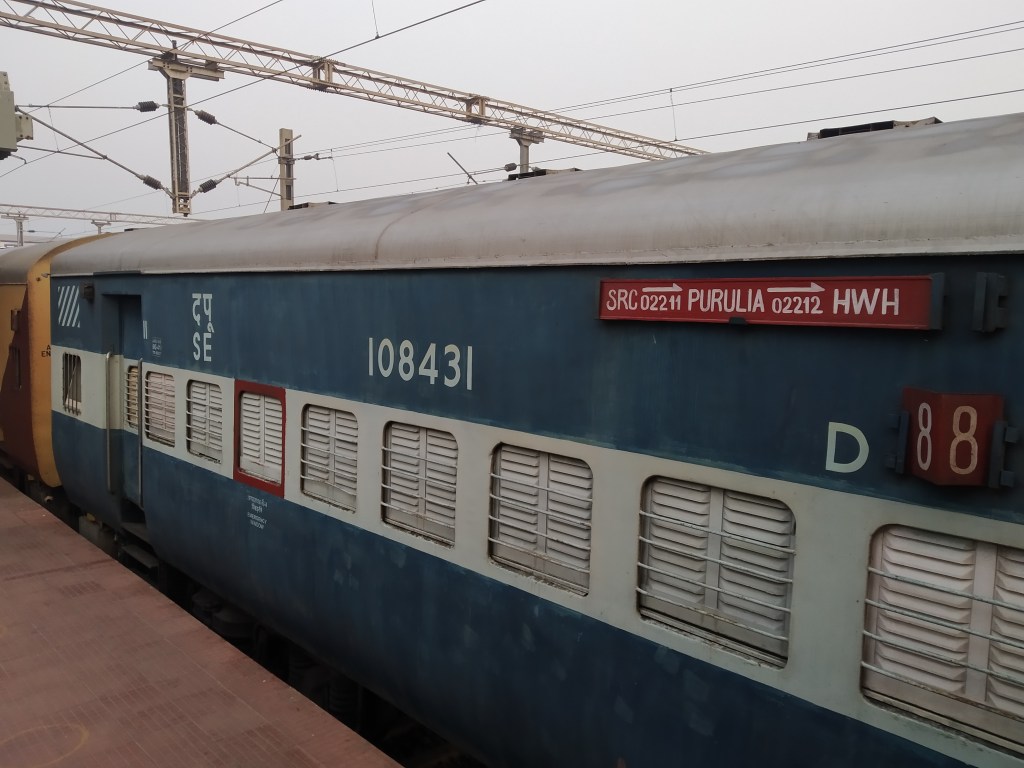
I Preferred, the Train Rupasi Bangla (02211) which took 3hours 30minutes to reach Bankura from Santragachi junction. Then we took a toto to reach the bus stop (it took about 10min). We boarded in a bus which headed towards Khatra (it took almost 2hours) . From Khatra pump more we took a engine van to reach our destination (15min).
It is the first time that I have arranged everything of my own from online ticket booking to hotel booking. So, it is a memorable trip for me. With the blessings of the rising sun my mother and I set out. Luckily breaking my Dad’s belief of not having a toto at the silvery dawn we got a toto to reach Andul Station. After that we reached Santragachi station by 5.46’s Panskura Local. At platform no.1 the Rupasi Bangla express was ready to depart. We took our respective seats (D1/41&42) and the train progressed at 6.25am. We enjoyed our train journey with sleepy eyes. Though it was the middle of march (20th March, 2021), the cool winds did not make us feel so. However, the running bunch of greens welcomed us in our Sonar Bangla.
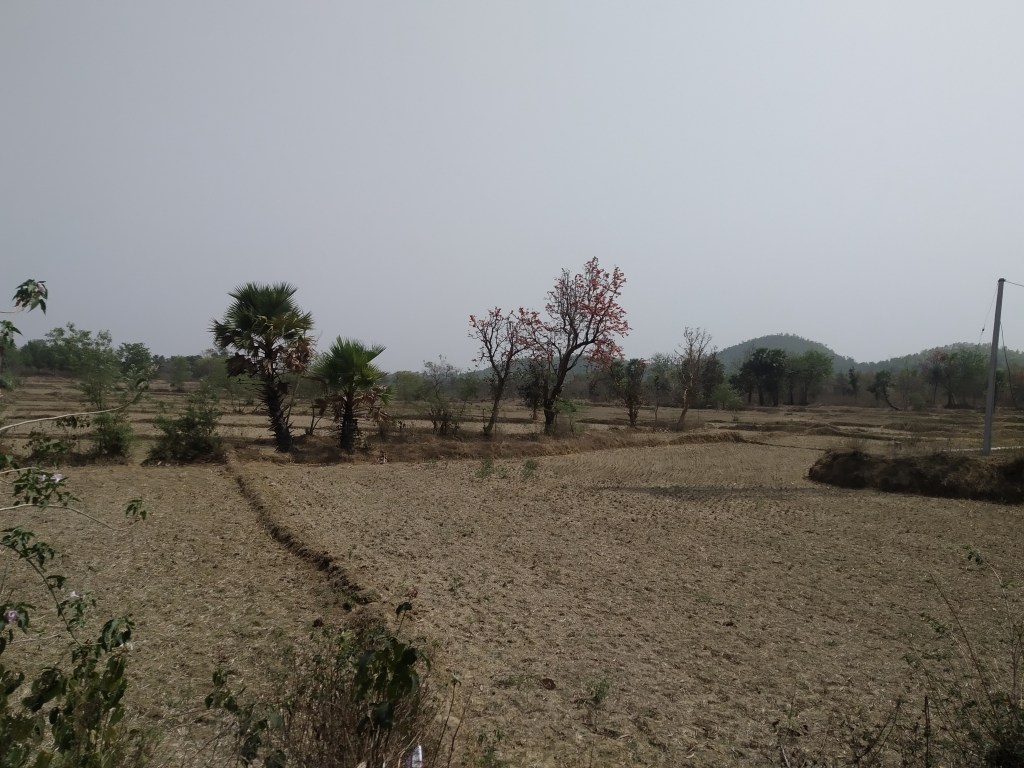
On the way to Khatra, through the window of the bus we cherished the landscapes that the king of seasons gifted. A vibrant beauty of Bengal with blooming red-‘Palas’ in the midst of dry fields seemed to be so enchanting that I just wanted to collect the fallen palas flowers and make a fine-garland.
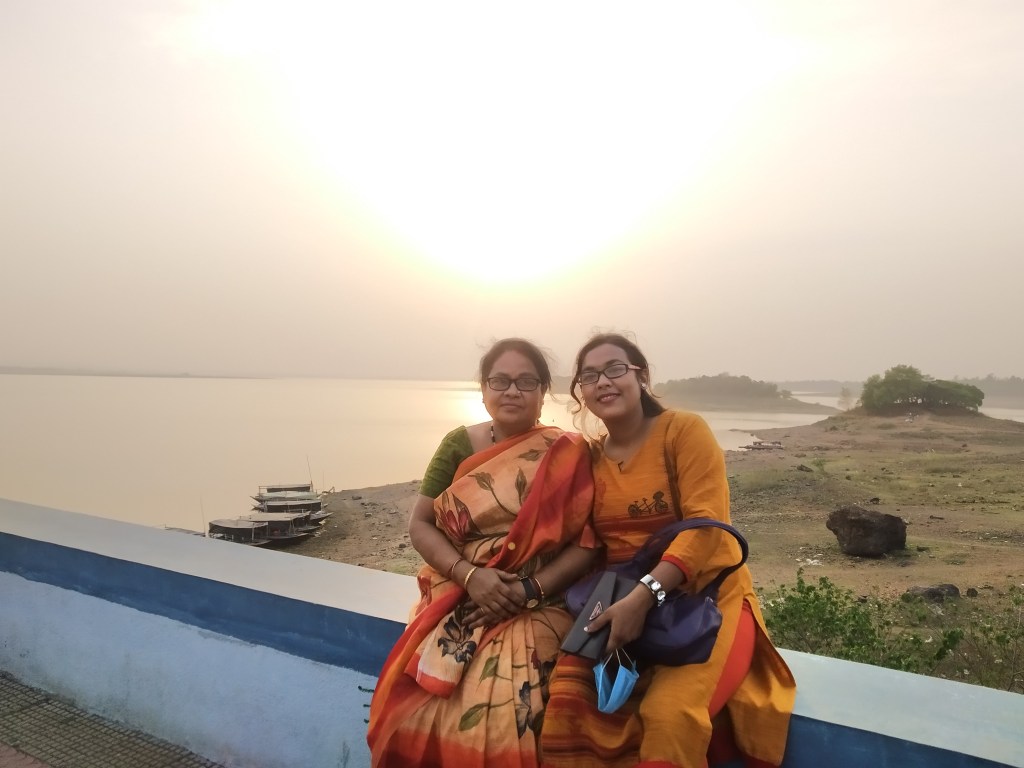
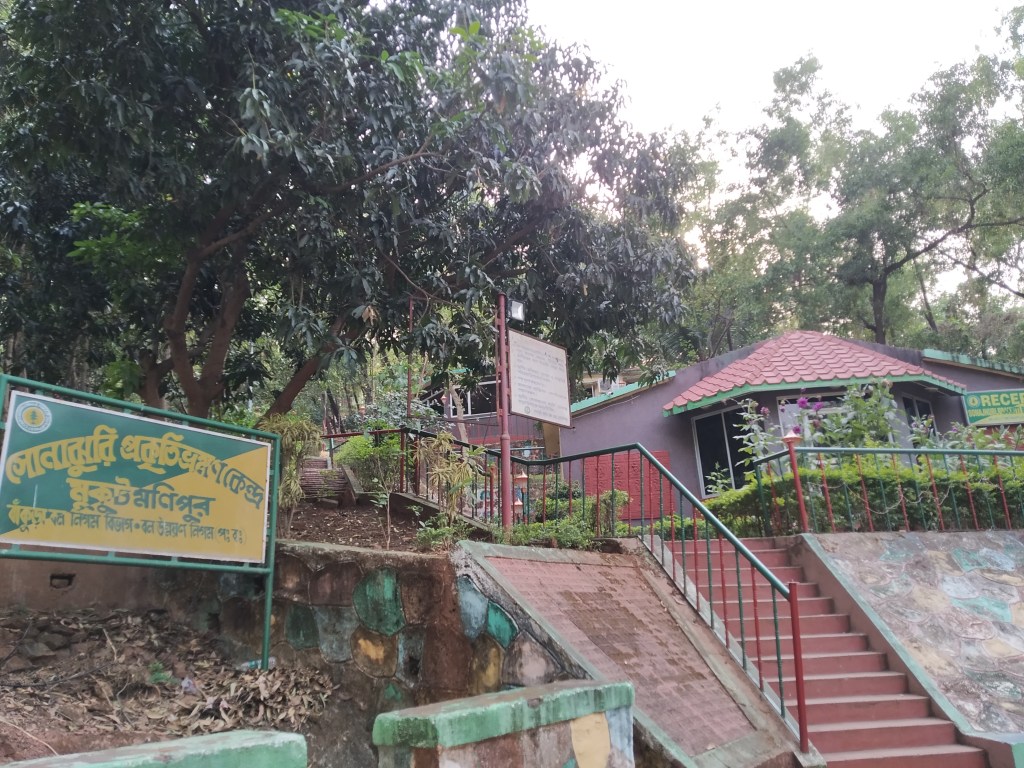
Finally we reached Mukutmanipur when the clock struck at 12.40. Neglecting the drops of sweats we walked up to reach our resort- Sonajhuri Prakriti Bhraman Kendra which was close to the Kangsabati Dam. This nature resort is so beautiful that one can easily spend a quality time with his or her family. Here the shelter of tall trees and sweet chirping of birds touched our hearts. The rooms are on the lap of hilly rocks and there are many AC and NON AC rooms for accommodation. The names of the rooms are very unique as they refer to the names of certain trees like Tal, Tamal, Mahul etc. We stayed at Tamal-2 which neared the Hill top view point. A magnificent view of the dam can be cherished from the hill top view point.
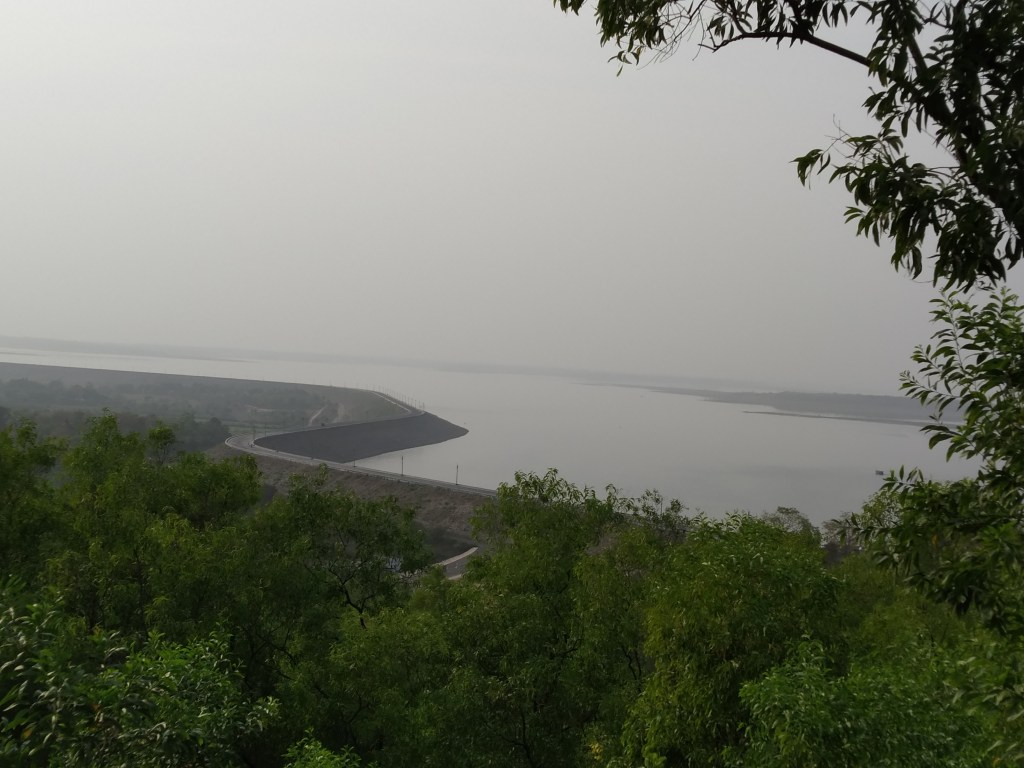
Without any further do we took a cozy bath and got ready for having our lunch in the canteen. There the sonajhuri trees were showing their gracious presence through the window panes. After finishing the lunch we had a quick and nice nap in our soft and tidy bed. My mother woke me up when it was 4 o’clock. Then we went for exploring the dam area. From sonajhuri the dam is a 10 minutes walk. We reached there and reserved a toto for visiting places like pareshnath temple, kali temple, musafirana view point and the mohana of kumari and kangsabati river.
All these places were located on the dam. Basically the kangsabati dam is the major attraction in mukutmanipur. The setting sun created a golden splendour in the quiet water of the dam. However, the evening passed in the brewing fume of tea.
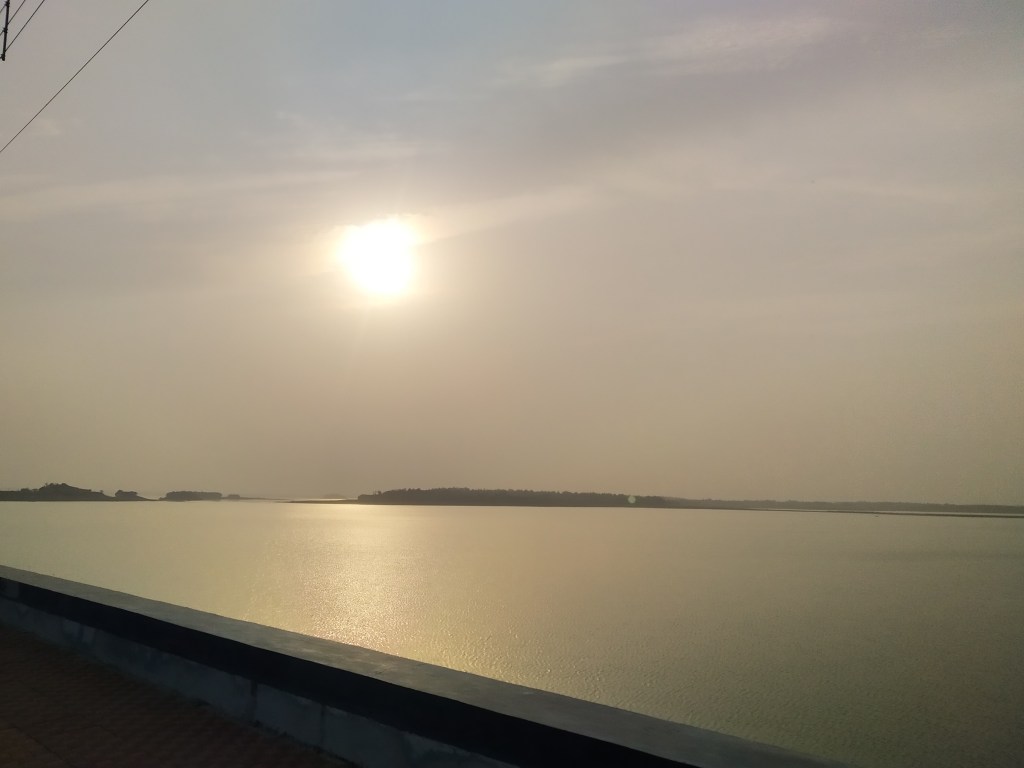
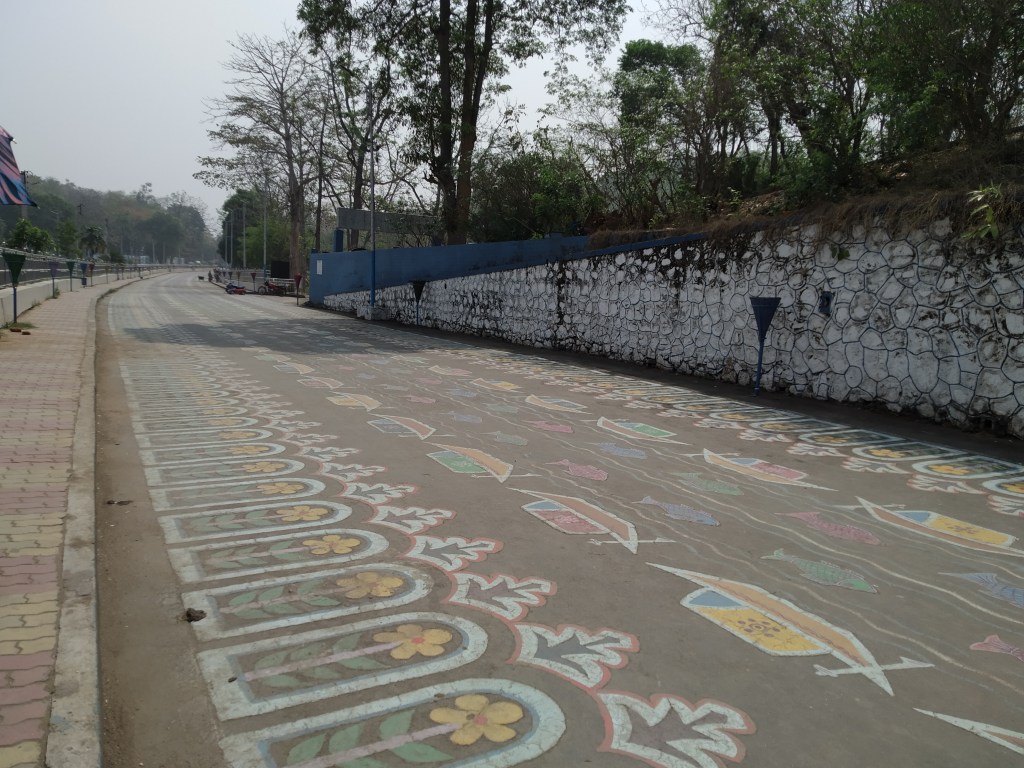
The next day we explored the dam by boating. Many stalls were there beside the dam in which beautiful earthen pots and crafts can be found. We took some of them to cherish the essence of the soil of Bankura.
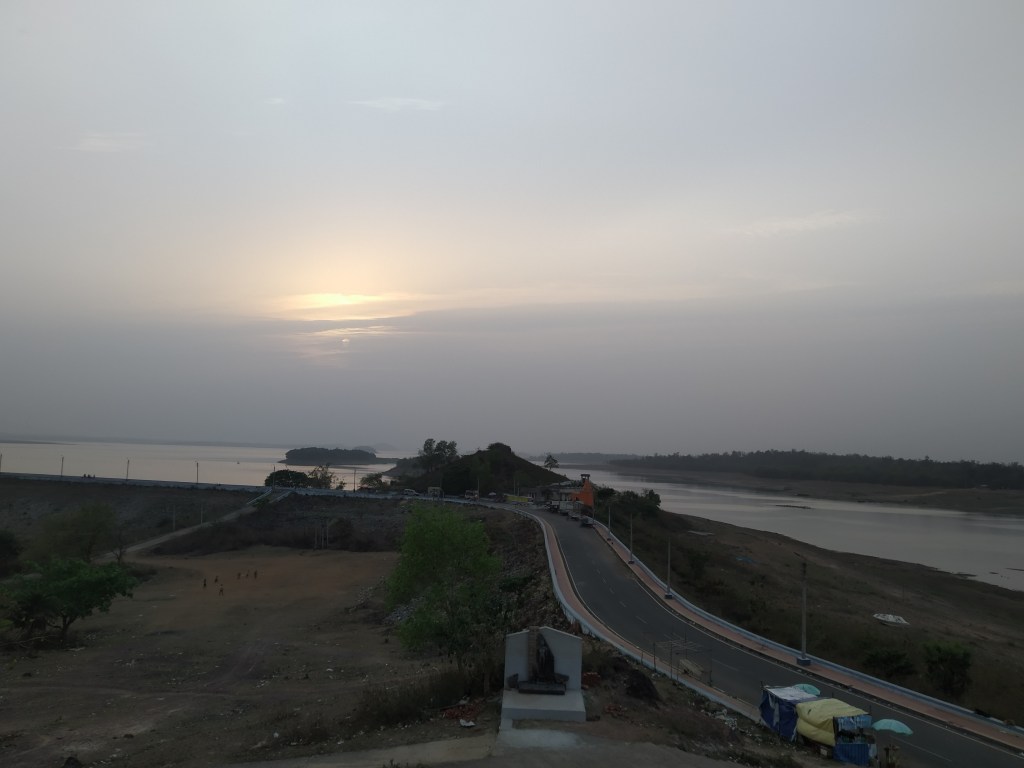
We did not delay much as we had our train at 5:12pm from Bankura. I think it was a tiny but refresher weekend trip.
It’s all about how to perfect the imperfections
We are hardly aware of our lives which unveil a lot of teachings that enable us to grow. People are nothing but a farrago of imperfections to me and life is an opportunity to turn those imperfections into perfectness.
Cherishing experiences, good or bad, that made us sustainable in our own journeys works like a bless that the nature has gifted us. I think nothing can teach us like our own experiences.
Perhaps we all know these basic things but still we question ourselves to get a solution. In this random era we are trying to acquire a random solution but we need to know that life is not random; life flows in a direction which is much awaiting.
Nowadays morality of people cracks jokes in the name of ‘Gyan’ or ‘wisdom’. Yes, we are so mere to judge the word ‘wisdom’. We should learn deep and try not to make this great word so witty and funny unconsciously or consciously.
Experiences and values are the only things that can’t be stolen. They are meant to be our true guide in our long and fruitful life.
Quote
We live in a world where self-love makes sense of selfishness and a thing of pride probably. Atleast in our country it takes a good place. If one can’t love his or her own personality, then how he or she can cater it to the other persons?! When we give ourselves so much opportunities to let us down, no one will be going to help us in that situation. Whatever may be the situation self love always works because you don’t have to rely on any other person’s prognostication. At some point everything and everyone seem to be parting with us but we should love us and accept us the way we are.
Quote
When we become too busy with our work and in the mean time we realize a huge vacuum within us; that probably corresponds to our wisdom.
Western Ghats, The True Treasure:
The biodiversity rich flora and fauna of the beautiful Western Ghats is no doubt India’s pride. The southern part of India, drawing a stretch of 1600 km, containing chains of mountains parallel to India’s western coast recognized as an UNESCO World Heritage Site since 2006 and it is one of the eight hotspots of biological diversity in the world. It traverses through the states of Kerala, Karnataka, Tamil Nadu, Goa, Maharashtra and Gujarat. As we know, there is always a special insignia in the old things; also in this mountain chain (which is older than the Himalayan mountains) that feature reflects. The persistence of unique biophysical and ecological processes is so intense here. The montane forest ecosystems on the slopes of mountains affect the monsoon weather pattern of India.
However, as the endemic species are in threat, now the exceptionally high endemism of the Western Ghats is a matter of great concern for us. Animals like Nilgiri tahr (Nilgiritragus hylocrius) and the long tailed macaque (Macaca fascicularis) are endemic to this area. Many species of plants such as Anaphalis neelgerryana, Elaeocarpus recurvatus, and grasses like Eriochrysis rangacharii come across different threat factors including habitat loss, climate change and being outcompeted by invasive species. Lantana camara is a very common invasive species which is of American origin.
So, effective conservation effort is a must to compensate for the golden loss. Previously for conservation Gadgil Committee or WGEEP was set up in 2011 which declared 64% of the Western Ghats to be Ecologically Sensitive Area (ESA) and only limited development is allowed in graded zones. But the report of Gadgil Committe is criticized to be too eco-friendly without relying on real situations. In contrast to this the Kasturirangan reports say that only 37% area of the Western Ghats is under ESA. It tries to keep a balance between development and environment. The mining activities, thermal power projects, red industries, hydropower projects should be allowed in this natural treasure only after a thorough scientific research.
Therefore, we should not extend the debate of development versus conservation rather we should try to mitigate the difficulties in order to save the hottest hotspot which accommodates at least 325 globally threatened flora, fauna, bird, amphibian, reptile and fish species.
 Prevailing folds to unfold.........